Stop Doing Work a
Robot Could Do
You didn't start your business to spend half your day on admin. Here's why automation isn't just smart — it's essential.
There's a moment most business owners recognise. It's 7pm. You've seen clients all day, done great work — the work you actually built this business for. And now you're staring down a pile of admin: chasing invoices, updating spreadsheets, copy-pasting information between systems, responding to the same three types of emails for the fiftieth time this month.
That's not running a business. That's being buried by one.
"The goal isn't to remove the human from your business. It's to remove the robot work from your humans."
Automation has a reputation problem. People hear the word and think: complicated, expensive, only for big companies with IT teams. But the reality in 2026 is the opposite. The tools are accessible, affordable, and built for small businesses. The question isn't whether you can automate. It's whether you can afford not to.
The Real Cost of Doing It Manually
Here's the thing about admin: it doesn't feel expensive in the moment. Sending a follow-up email takes two minutes. Entering a new client into your CRM takes five. Reconciling last week's bookings takes twenty. But those moments compound.
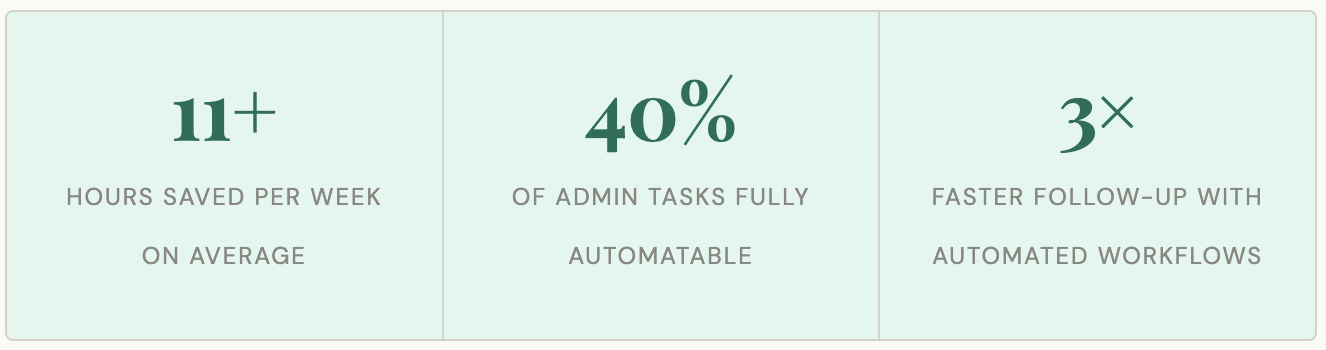
For most small business owners, repetitive admin consumes 10 to 15 hours a week. That's almost two full working days — not just lost in time, but lost in energy and attention. Every context switch costs you.
Now flip it: what would you do with two extra days a week? See more clients. Build a new offer. Finally record those videos you've been putting off. Take a weekend completely off.
What's Actually Worth Automating?
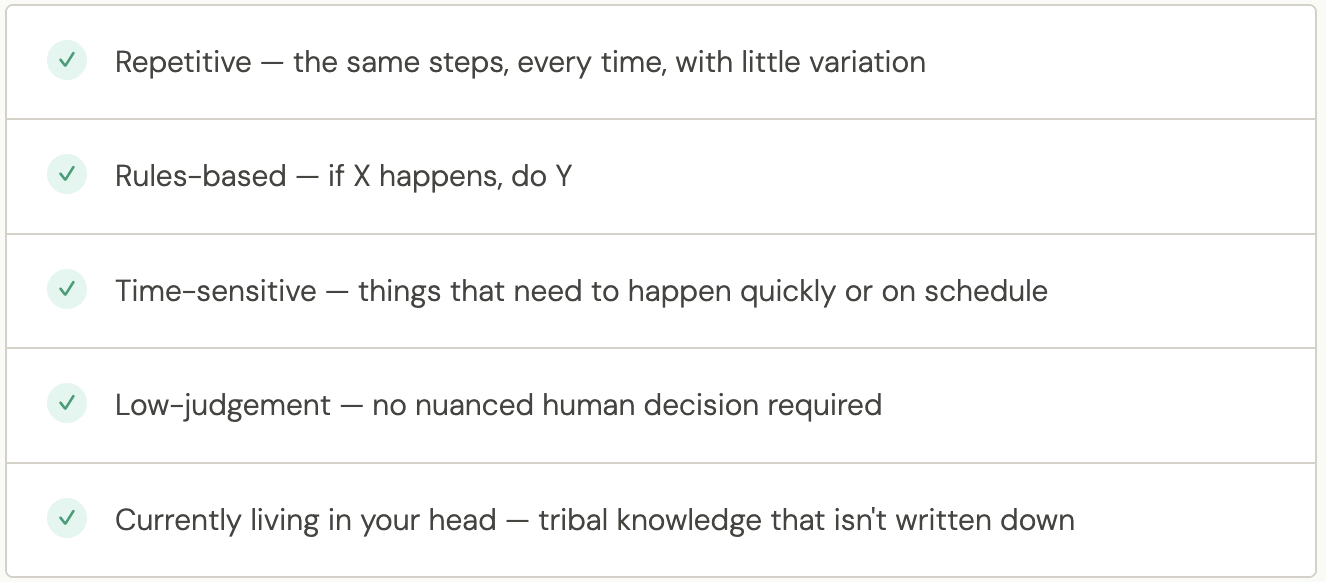
The best automation targets are tasks that are:
In practice, that often looks like: client onboarding sequences, appointment reminders, invoice follow-ups, intake forms, lead responses, internal reporting, and document generation. For most professional services businesses, that list alone covers the bulk of the admin burden.
Automation Isn't Impersonal. It's the Opposite.
One of the most common objections: "My clients chose me because of the personal touch. I don't want to feel like a faceless corporation."Completely valid. And also a false choice.
Done well, automation delivers more consistency, not less warmth. It means your onboarding is polished every single time, not just when you're not overwhelmed. It means no client falls through the cracks because you forgot to follow up. It means the humans at your business — including you — are freed up for the conversations that actually matter.
"Consistency is a form of care. Automation makes it possible to care consistently."
Where to Start
You don't need to overhaul everything at once. The most effective approach is simple: audit one week of your own time. Write down every task you did that took less than 20 minutes and felt like you'd done it before. That list is your automation roadmap.Pick the one that happens most often. Build a simple workflow around it. See how it feels. Then repeat.
Most of our clients start with a single automation — usually a client intake or follow-up sequence — and save enough time in the first month to wonder why they waited.
The businesses that thrive over the next decade won't be the ones who worked hardest. They'll be the ones who worked on the right things and trusted the right systems with everything else.